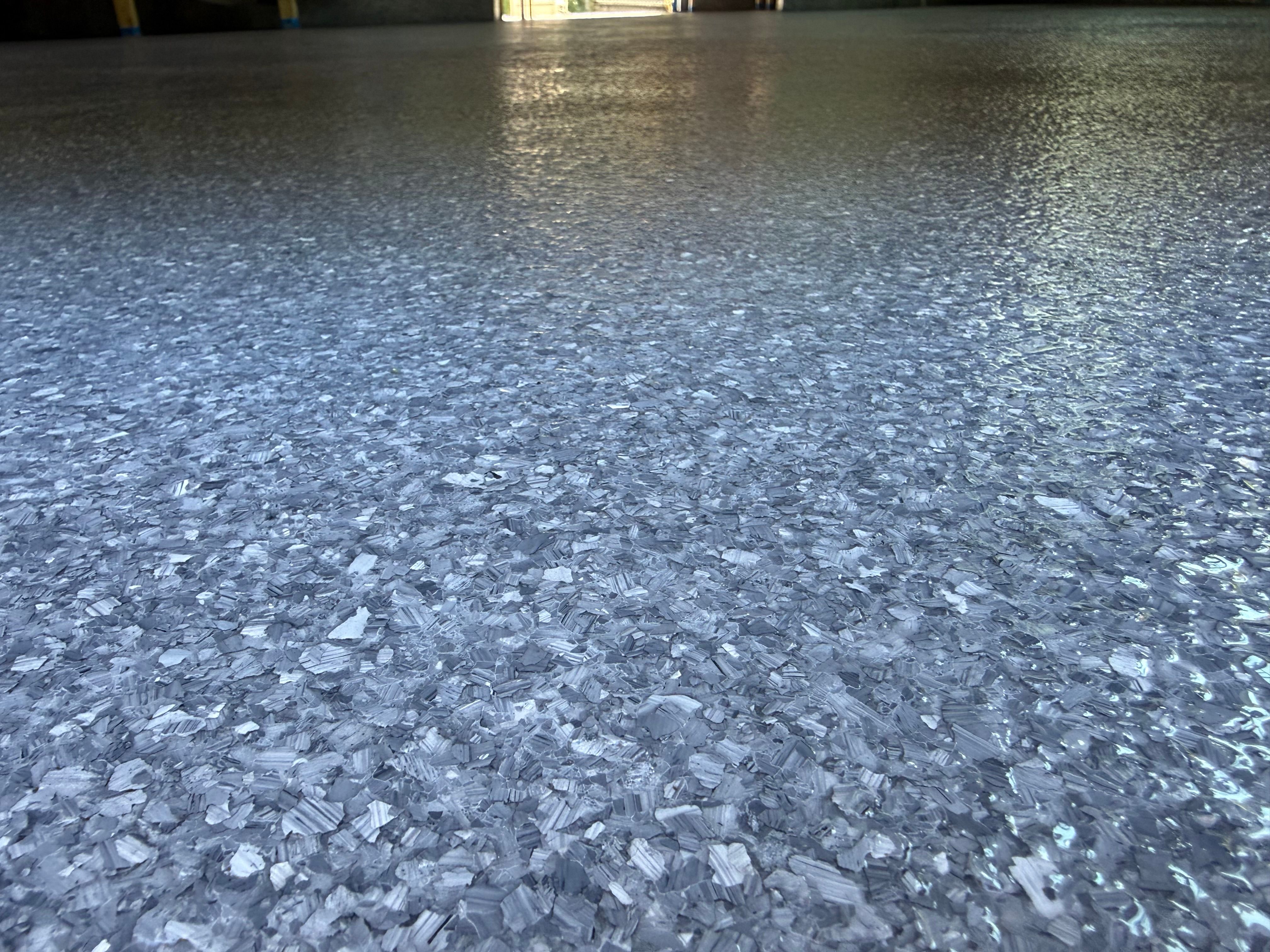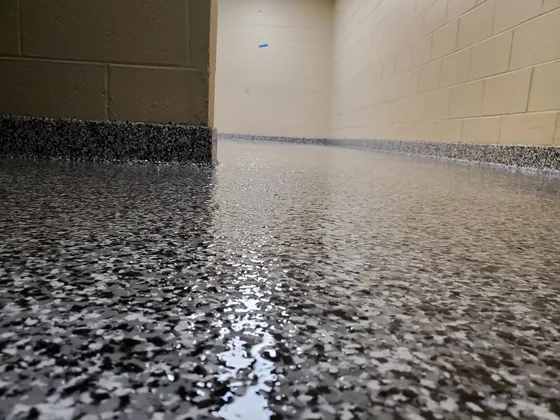
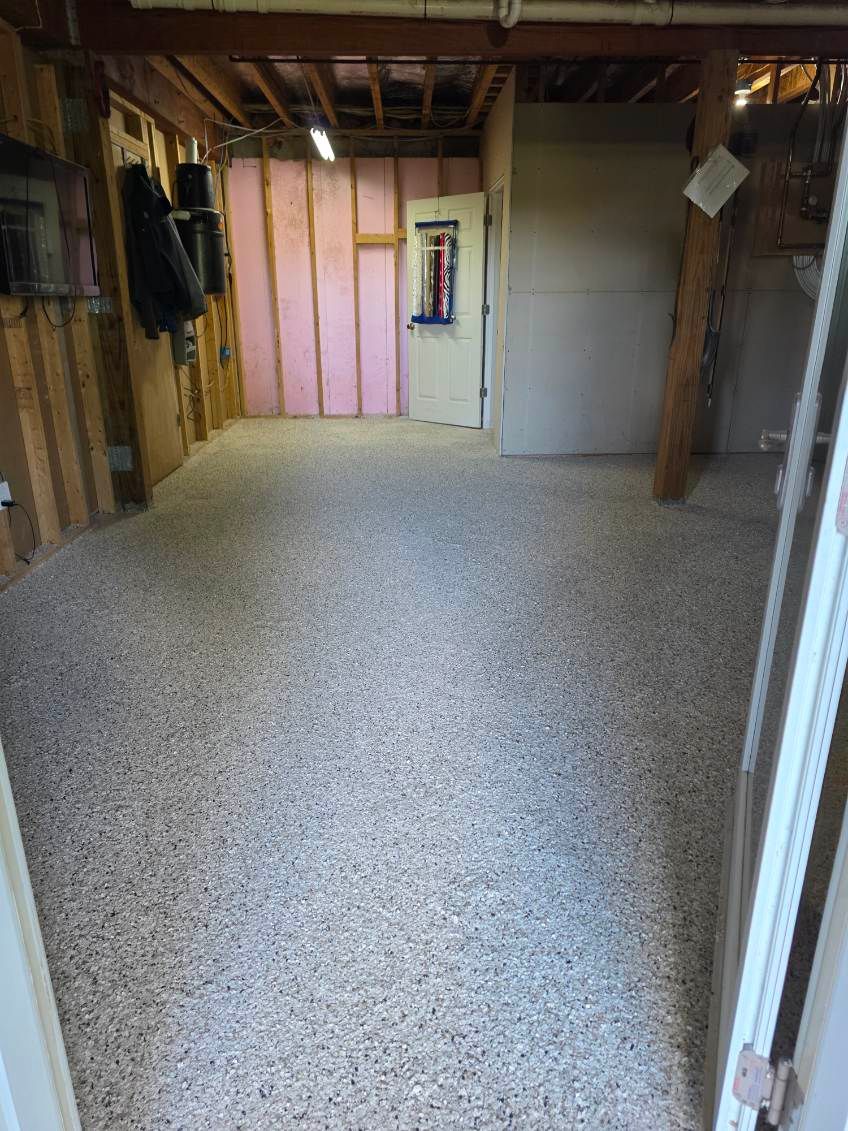
Every October and April, homeowners across the Hudson Valley, the Catskills, and the Capital District call to ask what temperature is too cold for epoxy garage floor installations and whether they still have a window before winter sets in. In Upstate New York, scheduling a concrete floor coating comes down to two things: the actual surface temperature of the concrete slab, and whether the room is an unheated garage with a wide overhead door or an enclosed interior space inside the house.
At Next Level Epoxy, we follow a straightforward seasonal rule built around how our resins cure in the field:
- Over 40 degrees F slab check in spring and fall: At every spring and autumn estimate, we test the concrete surface with an infrared thermal temperature gun to make sure the slab is over 40 degrees F before we coat.
- Winter is for interior rooms: Bathrooms, laundry rooms, and basements are our main winter work. Inside a heated home, concrete slabs stay warm and protected from outdoor wind and snow.
- Garages usually wait for spring: Coating a garage in the middle of winter is possible only by setting up an exterior tenting, tarp, and heating enclosure outside the bay doors, which adds cost and is not usually suggested. Even if a garage has radiant floor heat, the overhead door must stay open during work and the outer slab lip outside the door stays exposed to the cold.
Here is how concrete temperature affects multi-layer floor coatings, why slab temperature lags behind daytime air temperature, and how to plan garage versus indoor projects through the New York calendar.
Why Concrete Surface Temperature Matters More Than Air Temperature
When you pour a two-component resin onto a concrete floor, the liquid coating does not stay at room air temperature. Because a concrete slab has huge thermal mass sitting directly on the ground, the thin layer of wet resin immediately takes on the temperature of the concrete it touches.
In spring and fall across Greene, Columbia, Albany, Schoharie, Ulster, and Dutchess counties, a sunny afternoon can easily reach 58 or 60 degrees F in the air while the concrete slab inside a closed garage is still sitting in the upper 30s from a frosty night. That is why we never guess from the weather forecast. During every free on-site estimate, we measure the floor, take moisture readings with a digital moisture meter, and in spring and fall check the slab surface across the bay and near the door threshold with an infrared thermal temperature gun to confirm the concrete is over 40 degrees F.
Our Over-40-Degree Slab Check vs General Industry Figures
If you read general coating articles online, you will often see a generic 50 to 55 degrees F minimum cited as general industry background for standard hardware-store or commodity epoxies. That 50 to 55 degrees F figure is general industry background, not Next Level Epoxy’s rule. For the professional 100% solids moisture vapor barrier (MVB) epoxy base coats, urethane topcoats, polyurea topcoats, and clear polyaspartic topcoats we install, our field threshold is a concrete surface temperature over 40 degrees F.
When concrete drops below that threshold during application and curing, three problems happen:
- Thickened resin viscosity: Cold concrete chills the liquid epoxy on contact, making it thicker and slower to wet out into the microscopic pores opened by mechanical diamond grinding.
- Sluggish cross-linking: Two-part epoxy, urethane, polyurea, and polyaspartic coatings cure through a chemical reaction that slows down as the slab gets colder, stretching out the window before the next layer can be applied.
- Condensation risk at the doorway: When warm daytime air meets a cold concrete slab sitting near the dew point, an invisible film of moisture can condense on the surface and interfere with adhesion.
Why Winter Is Ideal for Basements, Bathrooms, and Laundry Rooms
While unheated garages wind down once late-autumn freezes arrive, our crew works straight through the winter indoors. Bathrooms, laundry rooms, and basements are our bread-and-butter winter projects.
Because interior rooms sit inside your home’s heated envelope and do not require an eight-or-sixteen-foot overhead garage door to stay open to the weather, the concrete slab remains well above 40 degrees F from December through March. Winter is actually one of the easiest times of year for homeowners to upgrade:
- Basement utility rooms, furnace rooms, and rec rooms: We mechanically diamond grind the slab with dust-extraction vacuums, repair cracks flush with our fast-curing two-part flexible epoxy crack filler, apply a 100% solids MVB epoxy base coat, and install decorative flake epoxy flooring, metallic epoxy floors with a clear polyurea topcoat, solid-color epoxy with a urethane topcoat, or concrete polishing. Read our companion guide on epoxy systems vs clear concrete sealers for basement floors to compare indoor finishes.
- Bathrooms and laundry rooms: For wet indoor rooms where steady footing and waterproof protection matter, our premium quartz epoxy flooring and flake systems pair a 100% solids MVB epoxy base with a clear polyaspartic topcoat and optional aluminum oxide traction additive.
On indoor flake and quartz projects, our crew needs 2 to 3 days minimum on site (and 4 to 5 days minimum for metallic and solid-color systems). You can walk on the finished floor in socks or clean shoes after 24 hours and move light items, washers, dryers, or storage racks back in after 48 hours.
Why Winter Garages Usually Wait for Spring (Even With Radiant Heat)
Homeowners occasionally ask if we can coat a garage floor in January or February if they run a space heater or turn up their in-floor radiant heat. While a winter garage install is physically possible, we usually suggest waiting for spring for three practical reasons:
- The garage door cannot stay closed during the work: Moving heavy diamond grinders, vacuum hoses, generators, and crew equipment in and out of the bay requires the garage door to stay open during preparation and coating. Any heat built up inside the garage escapes quickly as soon as the door opens.
- The outer lip of the slab stays exposed: Even when a garage has radiant heat tubing inside the floor, the exterior lip of the concrete slab just outside the overhead door sits in freezing outdoor air. That exposed perimeter edge will not hold the same temperature as the center of the bay.
- Tenting, tarps, and heating add unnecessary cost: To coat a garage properly in winter weather, our crew has to build an insulated tent and tarp enclosure outside the garage doors and run dedicated heaters through the multi-day cure. Because tenting and heating add extra cost to the project, waiting until spring slab temperatures climb back above 40 degrees F is almost always the better value for homeowners.
Installation Temperature vs Winter Operating Temperature
Do not confuse the temperature needed while liquid resin is curing with the cold a finished floor can handle once cured. Once our 100% solids MVB epoxy base and clear polyaspartic topcoat have completed their cure (including the 72-hour drive-on window for vehicles), subzero January nights, snowbanks, and road salt brines will not harm the bond. In fact, we choose a clear polyaspartic topcoat over every flake and quartz floor specifically because it stays flexible with the concrete through Upstate New York freeze-thaw swings and will not yellow in sunlight. Residential installations are backed by our residential warranty: Lifetime delamination and workmanship warranty, transferable to new owners. Excludes cracking and slab movement.
Plan Your Winter Basement or Spring Garage Estimate
We serve homeowners and businesses across Greene County, Columbia County, Albany County, Schoharie County, Ulster County, and Dutchess County. Whether you want to transform a basement, laundry room, or bathroom this winter or reserve an early spring slot for your garage, request a free quote for a free on-site estimate, with your quote the same day.