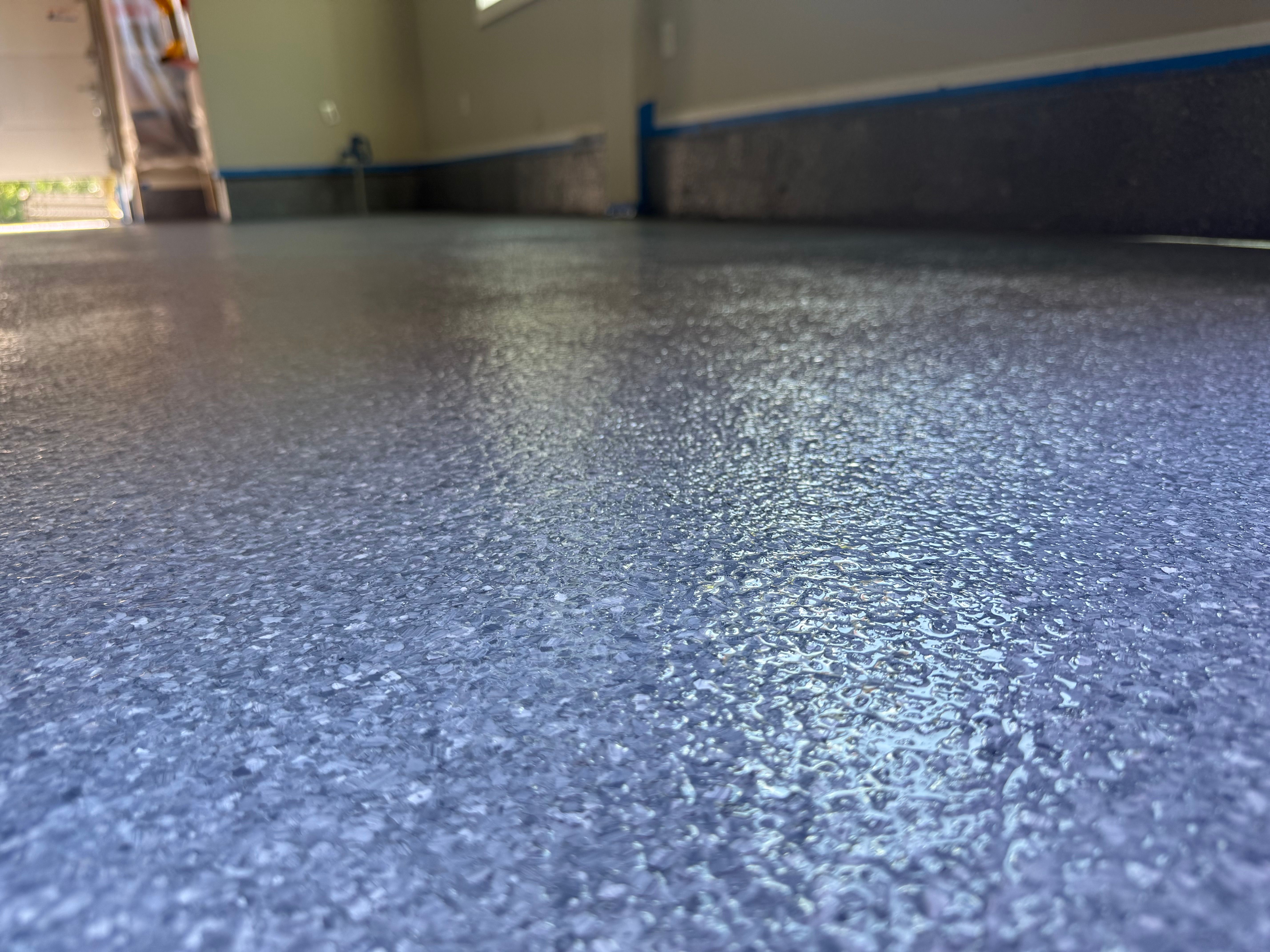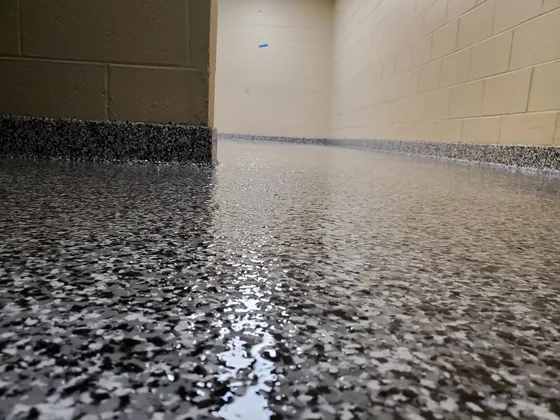

Before scheduling a garage transformation, almost every homeowner asks the same practical question: how long before you can drive on a new epoxy garage floor, and where should the cars, toolboxes, and lawn equipment go while the coating cures? Having a realistic day-by-day schedule makes the difference between a smooth project and a rushed move-in that marks up a fresh topcoat.
At Next Level Epoxy, we build multi-layer garage floor coatings that pair a 100% solids moisture vapor barrier (MVB) epoxy base coat with a clear polyaspartic topcoat on flake and quartz floors (or a urethane topcoat on solid-color floors). Because we refuse to rush surface prep or recoat windows, we give every customer two clear timelines up front: how many days our crew is on site, and the 24, 48, and 72 hour cure milestones after the final topcoat goes down.
Part 1: On-Site Installation Duration by System
Before the return-to-service clock even starts, each layer of your floor has to be mechanically prepped, applied, and allowed to cure to its proper recoat window:
- Decorative Flake and Colored Quartz Systems (2 to 3 days minimum on site): On Day 1, our crew mechanically diamond grinds the entire concrete slab, fills cracks and pitting with a fast-curing two-part flexible epoxy crack filler ground flush, rolls down the 100% solids MVB epoxy base coat (used on garages and basements because they carry more ground moisture, except on brand-new slabs built with radiant heat or an under-slab plastic vapor barrier), and broadcasts flake epoxy flooring chips or quartz epoxy flooring granules to refusal. Once that base layer cures, we return to scrape the broadcast flat, vacuum every loose chip, and apply the clear UV-stable polyaspartic topcoat (with optional aluminum oxide grip).
- Solid-Color and Metallic Epoxy Systems (4 to 5 days minimum on site): Solid-color garage and shop floors built with two to three coats of 100% solids epoxy and a protective urethane topcoat, as well as metallic epoxy floors built with 100% solids base layers, metallic pigment layers, and a clear polyurea topcoat, require sequential curing between each coat and take 4 to 5 days minimum on site.
- When timelines change: Slabs that need extensive structural crack rebuilding or extra moisture mitigation can add time to the schedule. Conversely, a faster-drying one-day option is possible in certain situations when slab conditions and project scope allow, which we can evaluate during your on-site estimate.
Part 2: The 24 / 48 / 72 Hour Return-to-Service Schedule
Once our crew finishes rolling the final clear topcoat and completes the walkthrough, the post-installation cure clock begins. For a standard garage installation, follow these three milestones:
24 Hours: Light Foot Traffic Only
Twenty-four hours after the final topcoat is applied, the surface is dry to the touch and ready for light foot traffic in socks or clean soft-soled shoes. Keep pets with sharp claws off the floor on the first day, and check the bottoms of your shoes before stepping onto the bay so you do not grind driveway gravel into the fresh finish.
48 Hours: Light Items, Cabinets, and Toolboxes
At the 48-hour mark, you can begin moving light garage items, storage totes, shelving units, cabinets, and rolling toolboxes back onto the floor. Always lift items into place rather than dragging sharp metal corners or unpadded wooden skids across the coating. Rolling tool chests on clean rubber or polyurethane casters is fine at 48 hours, provided you do not drop heavy jacks or weights on the slab.
72 Hours: Cars, Trucks, and Daily Vehicle Parking
Wait a full 72 hours after the final topcoat before driving or parking cars, pickup trucks, SUVs, motorcycles, or trailers inside the garage. Even though our clear polyaspartic topcoat sets rapidly on the surface, giving the full multi-layer epoxy and polyaspartic assembly 72 hours allows cross-linking to progress deep enough to handle two-ton vehicle loads, power-steering turns, and hot highway tires without imprinting.
Why Dry-to-Touch Is Not the Same as Full Chemical Cure
Two-component resin coatings harden through an exothermic chemical reaction between the resin base and the hardener. That reaction happens in stages:
- Tack-free stage (first several hours): The liquid film gels and loses its surface stickiness so airborne dust can no longer settle into the finish.
- Walk-on stage (24 hours): The polymer chains have linked tightly enough to support human body weight without denting.
- Full mechanical and thermal cure (72 hours and beyond): Cross-linking continues throughout the thickness of the film until the topcoat reaches the density needed to resist hot rubber tires (which can reach 140 to 180 degrees F after highway driving) and automotive fluids.
How Upstate New York Weather Affects Curing and Scheduling
Because chemical cross-linking slows down in the cold and speeds up in warmth, seasonal conditions across the Hudson Valley and Capital District matter:
- Our 40-degree F slab temperature rule: During spring and fall estimates, we bring both a digital moisture meter and a thermal temperature gun to verify that the concrete slab is above 40 degrees F. Below 40 degrees F, epoxy and topcoat resins cure sluggishly and cannot wet out the concrete properly.
- Outdoor coating season (April through October): Our peak garage coating window runs from April through October, when concrete slabs hold steady warmth through the overnight cure window.
- What to avoid during the first week: Do not hose down or mop the new floor during the first 72 hours. If it rains while your car is parked outside waiting for the 72-hour mark, let the tires dry briefly on the driveway before pulling in for the first time, and keep plastic tarps or non-breathable rubber mats off the floor during the first week so the coating can finish curing evenly in open air.
Plan Your Garage Floor Project Across Our Six-County Area
We install residential and commercial garage floors throughout Greene County, Albany County, Columbia County, Schoharie County, Ulster County, and Dutchess County. During your free on-site estimate, we test your slab, walk through your exact installation calendar, and review the 24, 48, and 72 hour cure milestones so you know exactly when your garage will be back in service. Request a free quote to get started.