Many of the residential garages we inspect across the Hudson Valley and Capital District were poured 20, 30, or even 50 years ago. After decades of salted winter slush, snowplow grit, oil drips, and seasonal freeze-thaw cycles, homeowners often wonder if coating an old concrete garage floor is even realistic or if the slab has to be jackhammered out and replaced first.
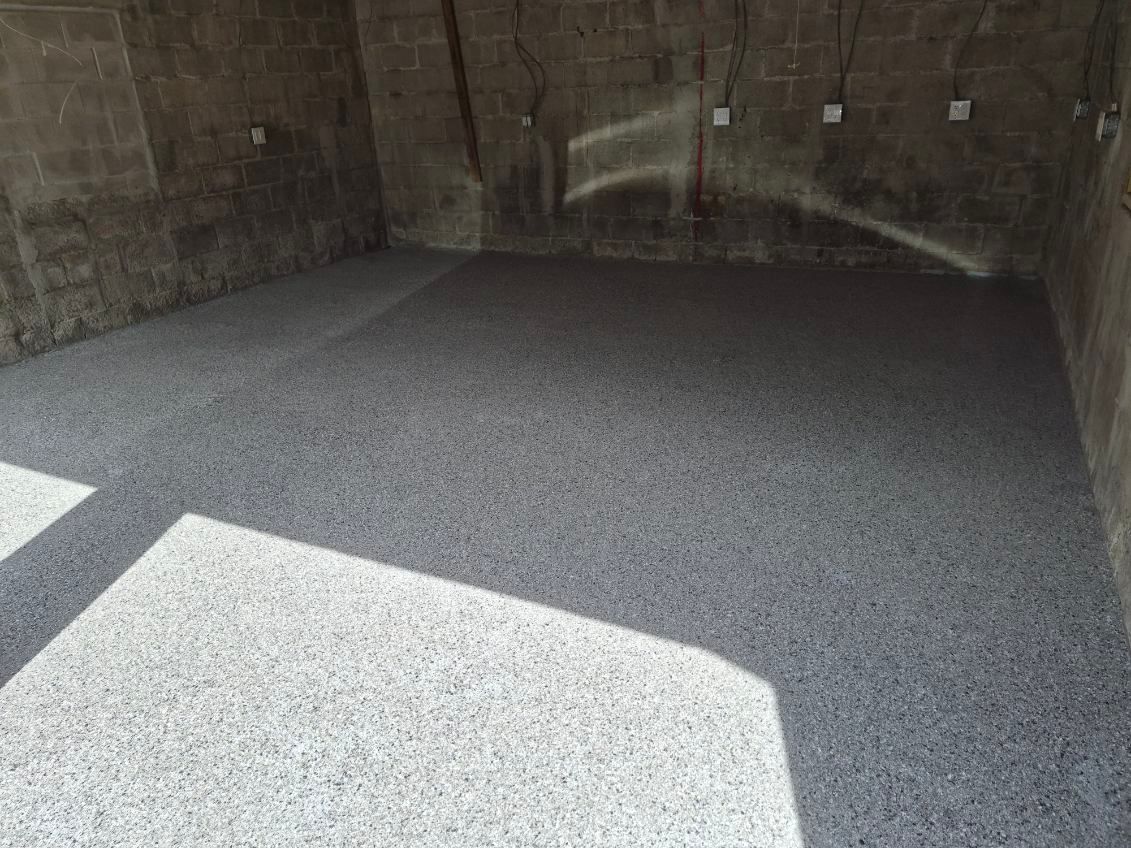
The good news is that surface ugliness and structural failure are two very different things. Most older New York garage slabs still have solid concrete a sixteenth of an inch below their pitted, stained, or dusty top crust. When prepared with mechanical diamond grinding, rebuilt with a flexible two-part epoxy repair compound, and sealed with a 100% solids moisture vapor barrier (MVB) epoxy base and clear polyaspartic topcoat, an older slab can look and perform like a brand-new room.
Here is how we evaluate an aging garage floor, how we prep and repair old concrete step by step, and the warning signs that tell us when a slab is genuinely too damaged to coat.
Step 1: Testing Moisture, Temperature, and Slab Soundness
Older garages were almost always poured directly on compacted gravel or soil without a modern plastic sub-slab vapor barrier. Before we recommend any garage floor coating, we start with a free on-site estimate where we inspect and test the concrete:
- Digital moisture meter testing: We check moisture levels across the slab so we know how much ground dampness is moving upward through the concrete pores.
- Thermal temperature checks in spring and fall: During cooler spring and autumn months, we use a thermal temperature gun to confirm the concrete slab is above 40 degrees F so the repair resins and base coat cure properly.
- Sounding and visual inspection: We check existing shrinkage cracks, salt-spalled tire lanes, control joints, and any areas where a previous owner rolled on latex garage paint, curing sealers, or a hardware-store epoxy kit.
Step 2: Mechanical Diamond Grinding Down to Sound Concrete
Acid etching and pressure washing cannot rehabilitate an old concrete slab. Acid struggles to penetrate oil-stained or carbonated old cement paste, and washing saturates the pores with water right before coating.
Instead, our crew mechanically diamond grinds every square foot of the floor. Heavy planetary grinders fitted with industrial diamond tooling mill away the weak, salt-damaged surface paste, strip off old paint or failed DIY coatings, and expose clean, solid concrete underneath. Just as importantly, diamond grinding opens a uniform mechanical profile so our 100% solids epoxy base coat can sink into the slab and lock in place.
Step 3: Rebuilding Cracks and Salt Pits with Flexible Two-Part Epoxy
Once the slab is ground clean and vacuumed, every hairline crack, spalled crater, and popped aggregate pocket is easy to see. Rather than skimming over defects with brittle cement patch that can pop loose during the next winter freeze, we repair eligible cracks and pits with a fast-curing two-part epoxy crack filler:
- Sets hard in minutes: The two-component repair resin cures rapidly inside the crack and bonds tightly to the diamond-ground concrete walls.
- Stays flexible with the slab: Older garage slabs still expand and contract slightly as Upstate temperatures swing between July and January. Our two-part epoxy crack filler retains slight flexibility so it moves with the concrete rather than shattering along the repair line.
- Ground completely flush: After the filler sets, we diamond grind the repaired areas flush with the surrounding slab so there are no ridges or high spots before the base coat goes down.
Step 4: Sealing with a 100% Solids MVB Epoxy Base and Full Broadcast
Because older garage slabs lack under-slab plastic sheets and carry more ground moisture, we prime them with a 100% solids moisture vapor barrier (MVB) epoxy base coat (the only time we omit an MVB base on a garage or basement is on a brand-new slab built with radiant heat or an under-slab plastic vapor barrier).
For older slabs with extensive crack and pit repairs, we strongly recommend a full broadcast system over a smooth solid color:
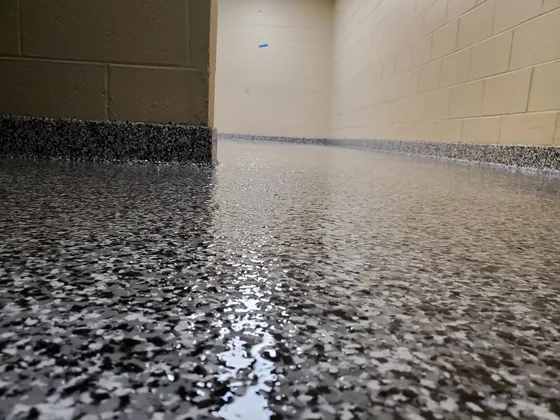
- Flake epoxy flooring: Multi-tone vinyl flakes broadcast into the wet 100% solids MVB epoxy base add physical thickness and variegated color pattern that visually camouflages flush-ground repairs, minor slab waves, and patched salt craters.
- Quartz epoxy flooring: Our premium upgrade over flake broadcasts hard, colored quartz granules into the MVB epoxy base for maximum impact resistance and built-in wet traction.
- Clear polyaspartic topcoat: Every flake and quartz floor finishes with a clear UV-stable polyaspartic topcoat (with optional aluminum oxide for extra slip grip) that stays flexible with the slab and will not yellow near the garage door. Flake and quartz installations take 2 to 3 days minimum on site, followed by 24 hours for light foot traffic, 48 hours for light items, and 72 hours before parking vehicles. Residential installations include our residential warranty: Lifetime delamination and workmanship warranty, transferable to new owners. Excludes cracking and slab movement.
When an Older Concrete Slab Should Not Be Coated
We would rather turn down a job or recommend concrete replacement than install a coating over a slab that cannot hold it. During our on-site inspection, we look for four red flags that mean a slab is not a candidate for coating as-is:
- Active vertical heaving or differential settling: If frost heave or soil washout has lifted one side of a crack significantly higher than the other and the slabs rock or shift independently under vehicle weight, no surface coating can bridge that structural movement.
- Deep crumbling or rot through the slab: If the concrete is soft, chalky, or disintegrating all the way down into the gravel base rather than just spalled at the top surface, diamond grinding will not find sound stone to bond to.
- Severe Oil Saturation: While surface oil drips grind out cleanly, a bay where engines leaked petroleum into the concrete for decades may require deep degreasing and test grinding to confirm the pores can accept resin.
- Standing water or active hydrostatic springs: An MVB epoxy base blocks vapor transmission, but active liquid water seeping up through open structural fractures requires drainage correction first.
Schedule an Honest Assessment of Your Garage Slab
Our crew inspects and coats older residential and commercial garage slabs across Greene County, Albany County, Columbia County, Schoharie County, Ulster County, and Dutchess County. Request a free quote and we will come out, test your concrete moisture, inspect the cracks in person, and tell you straightforwardly what your floor needs.