Property owners across the Hudson Valley and Capital District often have more than one slab to protect: a daily-driver two-car garage attached to the house, a detached workshop, or a rural pole barn and equipment bay. When comparing a concrete sealer vs epoxy garage floor, the decision is not about which product is universally better; it is about whether you want to preserve the natural gray concrete with a clear protective seal or transform the slab with a high-build, decorative wear surface built for hot tires, heavy tools, and five months of New York road salt.
Because we install both concrete sealing and clear coats and multi-layer garage floor coatings, here is how we choose the right sealer chemistry, how a sealer compares with our 100% solids epoxy and polyaspartic systems, and which option fits garages, shops, and outbuildings best. (If you are comparing options for a below-grade interior room inside the house, read our separate guide on epoxy systems vs clear concrete sealers for basement floors.)
Preservation vs Transformation: What a Sealer Does vs What an Epoxy System Does
The fastest way to narrow down your choice is to look at what happens at the surface of the concrete slab:
- Concrete sealers (slab preservation): A concrete sealer soaks into the upper pores of the slab or forms a thin protective clear coat over the concrete. It stops chalky gray concrete dust, slows down liquid absorption, and locks down odors while leaving the natural gray stone, trowel swirls, and color variations of your slab visible.
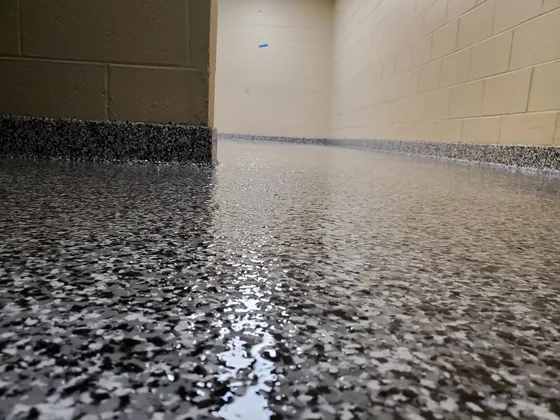
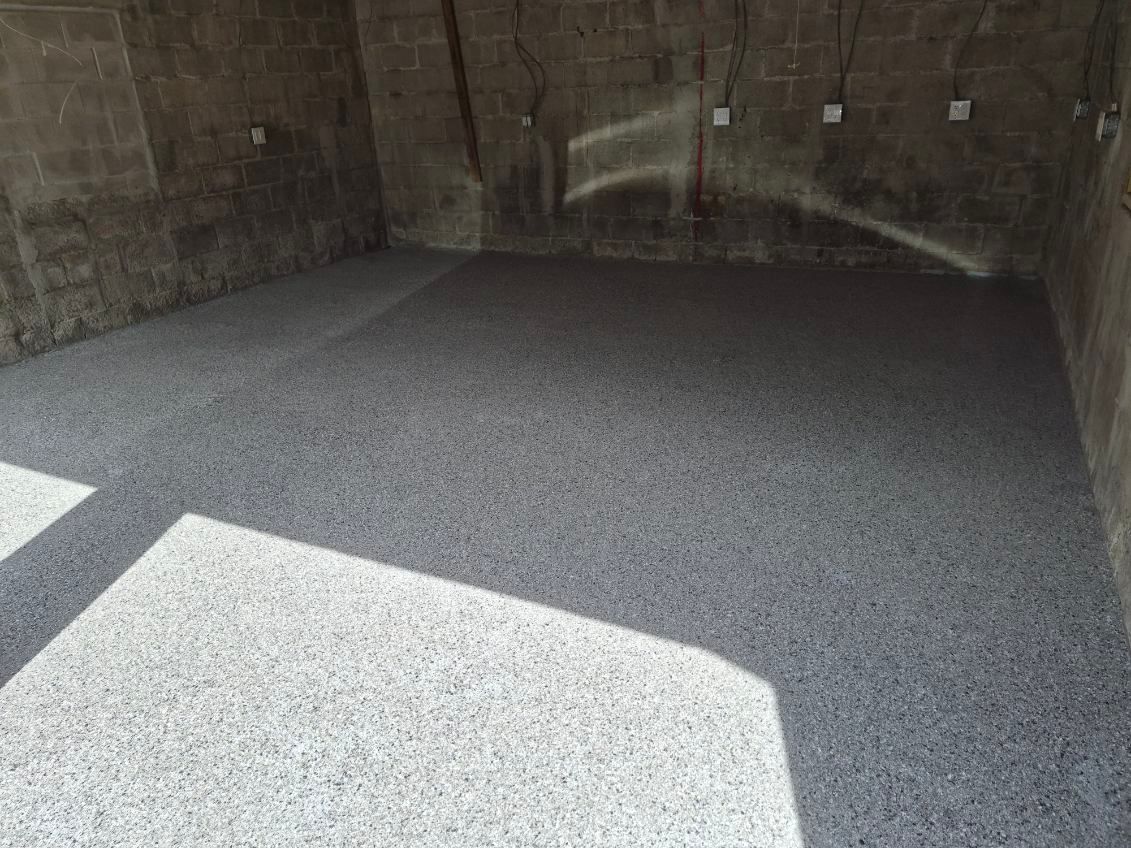
- Multi-layer epoxy and polyaspartic systems (full surface transformation): A professional garage floor coating builds a thick, seamless, non-porous armor over the diamond-ground concrete. It completely changes the color and texture of the room, hides flush-ground crack and pit repairs, and creates a chemical and mechanical barrier between your concrete and hot tires, road salt brines, oil spills, and dropped tools.
How We Choose Concrete Sealers (and Why We Avoid Acrylics)
Not all concrete sealers hold up the same way in a New York garage, barn, or workshop. When we evaluate a floor for concrete sealing and clear coats, the sealer we recommend depends on the concrete and what you need the floor to do:
- Solvent-based penetrating sealers (including multi-coat odor sealing): A solvent-based penetrating sealer wets deeply into the concrete capillaries. When a garage bay, kennel, outbuilding, or shop slab has a stubborn odor problem, we apply a solvent-based penetrating sealer in multiple coats to build a film that locks odors inside the slab and keeps new spills from soaking in.
- Poly (polyurethane) sealers: When a slab calls for a tough, chemical-resistant topical clear coat that stands up to workshop traffic and regular washing, we use a poly (polyurethane) sealer that cures into a durable protective finish.
- Why we usually avoid acrylic sealers: Many budget concrete sealers sold at hardware stores are thin water- or solvent-based acrylics. We usually avoid acrylics because they do not last as long; under hot vehicle tires, road sand, and shop foot traffic, thin acrylic films wear through quickly and require frequent reapplication.
Keep in mind that because clear sealers are transparent, they will not hide dark motor oil stains, rust rings, or patched concrete cracks.
How a Full Multi-Layer Garage Epoxy System Is Built
When a garage, home mechanic shop, or commercial bay needs maximum durability and a bright, finished appearance, a clear sealer is not enough. Our full multi-layer builds replace bare gray concrete with an engineered resin stack:
- Mechanical diamond grinding and flexible crack repair: We mechanically diamond grind the slab and fill cracks and salt pits with a fast-curing two-part epoxy crack filler that sets hard in minutes and stays flexible, then diamond grind every repair flush.
- 100% solids moisture vapor barrier (MVB) epoxy base coat: Because garages carry ground moisture, we prime with a 100% solids MVB epoxy base coat (the only exception is a brand-new slab poured with radiant heat or an under-slab plastic vapor barrier).
- Flake or colored quartz broadcast with a clear polyaspartic topcoat: On every flake epoxy floor and premium quartz epoxy floor, we broadcast vinyl chips or colored quartz granules into the wet MVB epoxy base and seal the system with a clear polyaspartic topcoat. We use polyaspartic as the clear topcoat because clear epoxy yellows and ambers over time in sunlight, while polyaspartic stays crystal clear and flexes with the concrete slab. Hot-tire rated polyaspartic options and aluminum oxide traction additive are available for vehicle bays and wet entries.
- Solid-color epoxy option: For shops that prefer a uniform solid color without flake or quartz, we apply two to three coats of 100% solids epoxy finished with a protective urethane topcoat with optional mixed-in traction aggregate.
Flake and quartz installations take 2 to 3 days minimum on site (solid-color systems take 4 to 5 days minimum). After the final topcoat on a standard garage, wait 24 hours for light foot traffic, 48 hours for light items, and 72 hours before parking a car or truck. Residential garage coatings include our residential warranty: Lifetime delamination and workmanship warranty, transferable to new owners. Excludes cracking and slab movement.
Matching the System to Your Garage, Shop, or Outbuilding
Across our six-county service area, property owners frequently combine both services on the same property:
- When Concrete Sealing & Clear Coats make sense: Clean new pole barns, light-duty storage outbuildings, garden tractor bays, or slabs with an odor issue where you want a low-maintenance, dust-free natural concrete floor without a decorative chip finish.
- When Flake, Quartz, or Solid-Color Epoxy makes sense: Attached and detached daily-driver garages exposed to winter road salt and hot tires, home woodworking or auto shops, commercial floor coatings for service bays, and older concrete garage floors with cracks and pitting that you want repaired flush and hidden under a full broadcast.
One Critical Rule: Why You Cannot Coat Over a Sealed Floor Without Grinding
Homeowners sometimes think about rolling a cheap sealer onto a new garage slab for the first year and putting an epoxy floor over it later. Before you do that, know that epoxy cannot bond over sealed concrete. Once a sealer closes off the concrete pores, liquid epoxy has nothing to grip. If we install an epoxy system on a previously sealed slab later, our crew must mechanically diamond grind the old sealer completely off back to bare, open concrete first.
Compare Concrete Sealing and Epoxy Systems on Your Slab
We serve property owners across Greene County, Columbia County, Albany County, Schoharie County, Ulster County, and Dutchess County. Request a free quote for a free on-site estimate, with your quote the same day, and we will inspect your concrete, test slab moisture, and help you compare sealing and full coating options side by side.