Fast cure times
Polyaspartic coatings are known for curing quickly, which can shorten project downtime compared with some traditional systems.
Polyaspartic Coatings
Polyaspartic systems are valued for fast cure times, UV stability, and a tough finished surface, making them a strong option for garages and high-traffic floors.
Best for: Garages, shops, commercial areas, high-use floors
Polyaspartic is a coating chemistry often used as a fast-curing, UV-stable topcoat over a base coat or flake broadcast. Compared with some traditional systems, polyaspartic is valued for shorter cure times, resistance to yellowing in sunlight, and a tough finished wear layer.
In many real-world floors, epoxy and polyaspartic are used together: epoxy as an economical base coat and polyaspartic as the durable topcoat. The right combination depends on the space, the schedule, and how the floor will be used.
Benefits
Polyaspartic coatings are known for curing quickly, which can shorten project downtime compared with some traditional systems.
Polyaspartic topcoats resist yellowing from sunlight, making them well suited to spaces with natural light.
A polyaspartic topcoat provides a tough, abrasion-resistant wear layer over the coating system.
The sealed, non-porous surface wipes down easily and resists staining.
Polyaspartic systems can be installed across a wider temperature range than some other coatings.
Common Problems Solved
Long downtime while a floor cures
Fast-curing polyaspartic systems can reduce the time a space is out of service.
Coatings that yellow in sunlight
UV-stable polyaspartic topcoats resist ambering and hold their color in bright spaces.
Topcoats that wear quickly under heavy use
A polyaspartic wear layer adds abrasion resistance for high-traffic floors.
Our Process
We inspect the concrete, prepare the surface, repair eligible defects, install the selected system, and finish with a final walkthrough.
We review the space, how it is used, and whether a polyaspartic system is the right fit.
We inspect the slab and diamond grind the surface to create a proper bonding profile.
Eligible cracks and surface defects are repaired before coating.
The selected coating layers are installed, finishing with a polyaspartic topcoat.
We review the finished floor and go over care recommendations.
Finish Options
A clear, UV-stable wear layer applied over a base coat or flake system.
A decorative flake broadcast sealed with a durable polyaspartic finish.
A uniform color base sealed with a tough, easy-clean topcoat.
Maintenance
Polyaspartic floors are designed to be low maintenance with a simple cleaning routine.
FAQs
Polyaspartic is often used as a fast-curing, UV-stable topcoat, while epoxy is commonly used as a base coat. Many systems combine the two. The best choice depends on the space, schedule, and how the floor is used.
Neither is universally better. Polyaspartic cures faster and resists UV yellowing, while epoxy offers a strong, economical base. We help you choose the right system for your project during the estimate.
Yes. A polyaspartic topcoat is frequently applied over a flake broadcast to seal the floor with a durable, UV-stable wear layer.
Gallery Examples
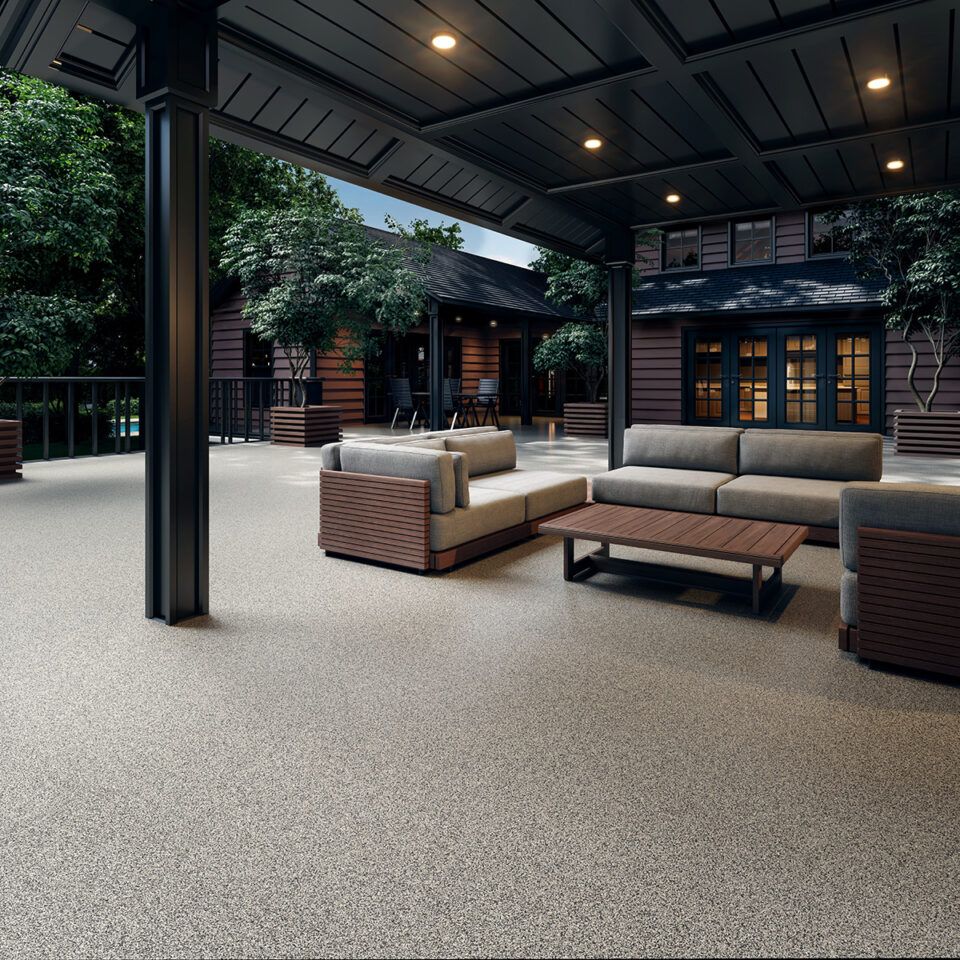
Representative finish example (supplier sample), not a specific Next Level Epoxy project.
Send a few details and photos. We will help you choose the right coating system.
Get a Free Quote
New here? Get a free estimate.
Mention the website when you reach out to ask about current offers on epoxy and polyaspartic floor coatings.