
When homeowners and business owners search for metallic epoxy basement floor ideas, they are usually looking for an alternative to basement carpet that traps damp odors or click-together plank flooring that can warp around a leaking bar sink or dehumidifier. Unlike tile or plank products that repeat a printed pattern every few feet, metallic epoxy floors are poured in place and worked by hand on site. Fine metallic powders suspended in 100% solids epoxy flow and settle as the resin cures, creating three-dimensional marbling, smoky depth, and light reflection that no factory flooring can duplicate.
Because metallic systems are smooth, high-gloss architectural finishes that take 4 to 5 days minimum on site to build properly, choosing the right palette and room application makes all the difference. Here is how metallic epoxy works in Hudson Valley and Capital District basements, home bars, and commercial showrooms, along with practical color directions and honest trade-offs to weigh during your design consultation.
How Our Multi-Layer Metallic Epoxy System Works
A lasting metallic floor is never a single thin coat rolled over bare concrete. In our installations across Upstate New York, every metallic system is built in distinct stages so the decorative pigment layer sits on a flat, moisture-protected foundation:
- Mechanical diamond grinding and flush crack repair: We mechanically diamond grind the concrete slab to remove surface laitance, old adhesives, or paint and open a clean bond profile. Cracks and surface divots are filled with a fast-curing two-part epoxy crack filler that cures hard in minutes while staying flexible, then ground completely flush so repair lines do not telegraph through the smooth finish.
- 100% solids epoxy base layers (with MVB protection): On below-grade basement slabs, we start with a 100% solids moisture vapor barrier (MVB) epoxy base to block upward ground dampness (unless the slab is brand new with radiant heat or a verified under-slab vapor barrier). Base coats create a uniform canvas beneath the metallic pour.
- 100% solids metallic pigment layers: We pour color coats made from the same 100% solids epoxy mixed with metallic powder, manipulating the pigments on site to create custom veining, soft clouds, or bold two-tone contrast.
- Clear polyurea high-gloss topcoat: Once the metallic layers cure, we seal the floor with a clear polyurea topcoat applied by sprayer or dry-mop method, curing to a glass-like high-gloss finish.
Our residential concrete coatings carry a central residential guarantee: Lifetime delamination and workmanship warranty, transferable to new owners. Excludes cracking and slab movement.
5 Metallic Epoxy Design Ideas and Where They Fit Best
Because every metallic floor is mixed and worked on site, sample photos serve as a starting point for your color family and movement style rather than a rigid template. Here are five proven design directions for residential basements and commercial interiors:
1. Soft Pearl White and Marbled Silver for Low-Ceiling Basements
Many older basements in river towns and village homes have low ceilings and small hopper windows that leave the room feeling dim. A soft white and silver metallic blend paired with our glass-like clear polyurea topcoat acts like a light reflector across the entire floor, bouncing overhead recessed lighting back into the room and making a lower level feel significantly more open.
2. Charcoal, Slate, and Liquid Silver for Media Rooms and Game Rooms
For finished rec rooms, home theaters, and pool-table spaces, two-tone charcoal and silver blends create the look of polished dark stone without cold grout joints. Darker gunmetal tones ground the room visually under leather seating or game tables while still catching subtle metallic highlights from wall sconces and under-counter LED strips.
3. Warm Bronze, Copper, and Espresso for Home Bars and Tasting Spaces
In basements and hospitality spaces featuring natural wood bar tops, exposed timber framing, or brick accent walls, warm bronze and copper metallic pigments complement wood tones far better than stark gray concrete. Hand-worked metallic veining gives a basement bar or lounge a custom, poured-in-place centerpiece that shrugs off spilled drinks and wipes clean in seconds.
4. Bold Statement Colors for Event Pieces and Feature Showrooms
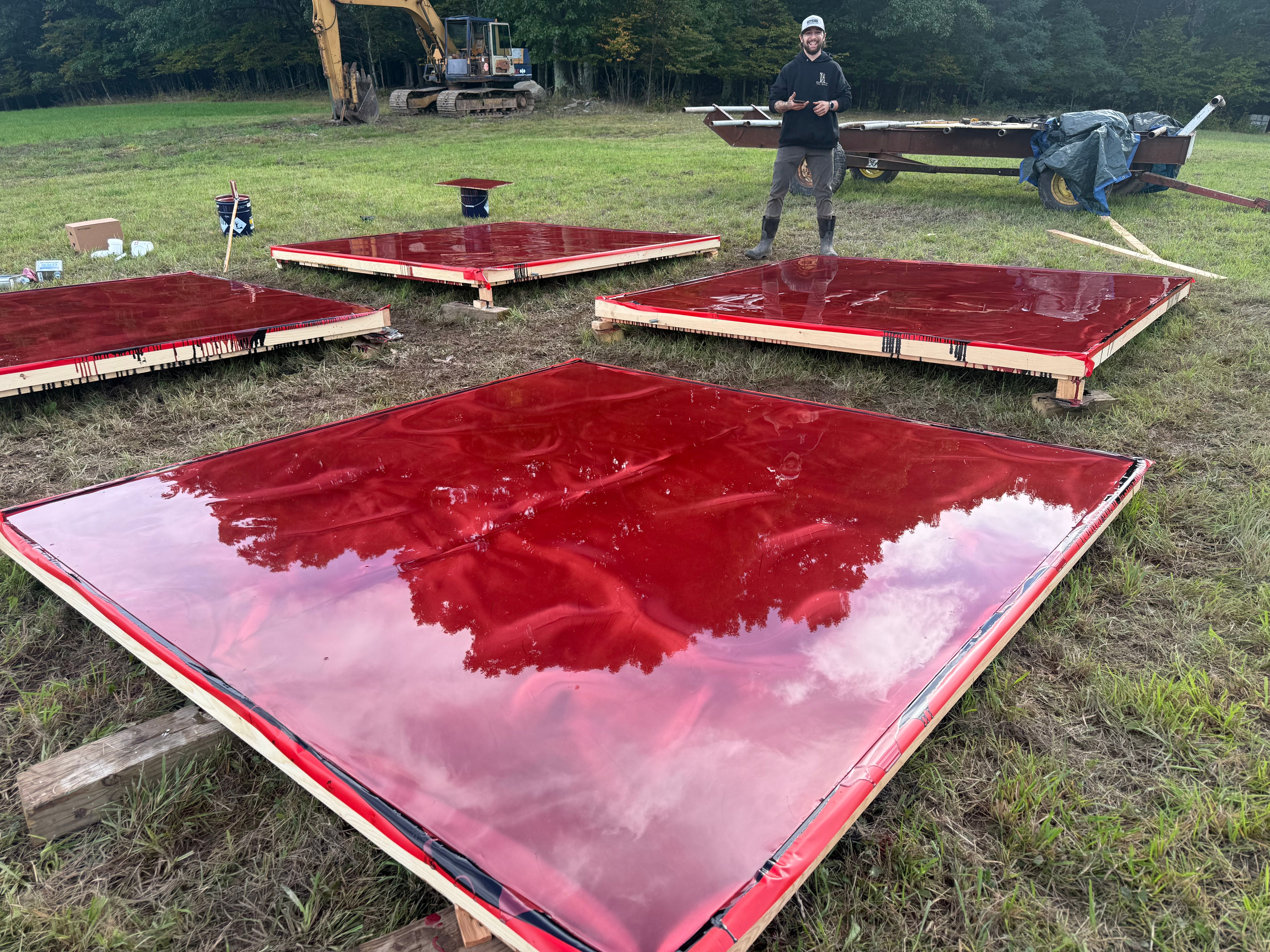
Metallic epoxy does not have to stay neutral. For boutique retail floors, salons, auto or power-equipment showrooms, and specialty projects, bold reds, blues, and high-contrast blends turn the floor itself into the focal point. For a custom wedding near Cairo, NY, we even poured portable wooden dance floor panels finished in deep red metallic epoxy with a mirror-like clear topcoat (a specialty event build on portable panels rather than a concrete floor), demonstrating how deep metallic pigment layers reflect sky and surrounding light.
5. Subtle Single-Tone Metallic Stone for Modern Offices and Studios
When a commercial office, design studio, or reception lobby needs a clean contemporary look without dramatic high-contrast swirls, working a single metallic tone over a matching base coat produces a quiet, suede-like depth underneath the high-gloss polyurea seal.
Honest Trade-Offs: Where Metallic Shines vs When to Choose Flake or Quartz
During a free on-site estimate, we walk through how you actually use the room before recommending a metallic pour:
- Smooth high gloss vs wet-area traction: Because the clear polyurea topcoat cures to a smooth, glass-like finish, it can be slick when wet. Metallic epoxy is at its best in dry interior rooms like finished basements, home bars, lounges, offices, salons, and showrooms. For a basement laundry room, furnace room, walkout mudroom, or active garage floor, we usually recommend flake epoxy flooring or our premium quartz epoxy flooring, both of which are sealed with a clear polyaspartic topcoat and can include fine aluminum oxide for wet-boot grip. (See our full comparison of basement epoxy systems vs clear concrete sealers.)
- Slab flatness matters: Because metallic epoxy self-levels and cures to a mirror shine, overhead lights will reflect across the surface. We diamond grind and repair cracks flush first, whereas heavily pitted concrete is often better camouflaged by a full-broadcast flake or quartz system.
- Simple non-abrasive care: Keeping a glass-like polyurea topcoat looking sharp is easy when you use the right tools. Dust mop regularly with a soft microfiber pad, and wash with warm water and a few drops of mild Dawn dish soap (see our epoxy floor cleaning and maintenance guide). Avoid stiff bristles, abrasive scouring pads, Pine-Sol, vinegar, or citrus cleaners.
Timeline and Winter Scheduling for Basement Metallic Floors
Because each 100% solids epoxy base layer, metallic pigment layer, and clear polyurea topcoat must cure in sequence, plan on 4 to 5 days minimum on site for a metallic installation. After the final topcoat goes down, wait 24 hours for light foot traffic and 48 hours before moving light furniture, bar stools, or fixtures back into the room (and 72 hours before heavy rolling loads).
Unlike unheated garages that usually wait for spring thaw, indoor basements, laundry rooms, and bathrooms are our main winter work, making late fall and winter an ideal window to finish a basement or commercial interior. Whether you are planning a basement bar, rec room, or commercial floor or comparing metallic against concrete sealing and concrete polishing, we serve Greene County, Albany County, Columbia County, Schoharie County, Ulster County, and Dutchess County. Request a free quote for a free on-site estimate, with your quote the same day.