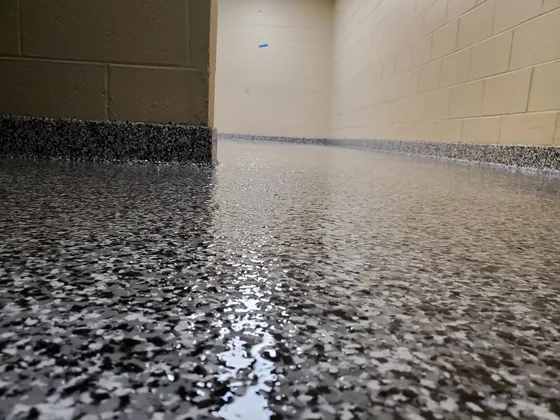

One of the biggest reasons homeowners upgrade bare concrete is how effortless cleanups become once the slab is sealed. Knowing how to clean epoxy garage floor systems properly keeps your topcoat bright, preserves wet-weather traction, and stops abrasive road grit from acting like sandpaper underfoot. You do not need expensive specialty chemicals: our crew recommends warm water and a small amount of Dawn dish soap alongside a few simple tools.
Whether your floor is a textured flake epoxy or quartz system sealed with a clear polyaspartic topcoat or an interior metallic epoxy floor finished with clear polyurea, the routine below will keep it looking sharp through every Upstate New York season.
Routine Weekly and Monthly Cleaning Steps
Because a cured polyaspartic, polyurea, or urethane topcoat is non-porous, dirt, road dust, and salt sit on top of the floor instead of soaking into the concrete. A quick routine keeps that grit from scratching the gloss:
- Dry sweep or blow out loose grit weekly: Use a soft-bristle push broom, a dry microfiber dust mop, or an electric leaf blower to clear sand, pebbles, and dry leaves out the garage door, paying extra attention to the tire paths.
- Wash monthly with warm water and Dawn dish soap: Fill a bucket with warm water and add just a few drops of Dawn dish soap. Work in sections across the floor, agitating stuck-on mud or road film before it dries.
- Rinse and squeegee dry: Rinse away the soapy water with a garden hose or a second bucket of clean water, then push the standing water out the garage door with a foam floor squeegee so dissolved dirt does not dry back onto the floor.
The Right Mop, Brush, and Squeegee for Textured Flake Floors
Full-broadcast flake and quartz floors have a built-in orange-peel texture that gives you grip when your boots are wet, but that same texture will shred a standard household sponge mop or snag the loops of a cotton string mop. Instead, stock three simple tools in the garage:
- Flat microfiber mop: A wide, loop-end microfiber pad glides smoothly over vinyl flake and quartz texture for quick dry dusting or light damp mopping.
- Soft-to-medium nylon deck brush: On a long handle, a soft nylon brush reaches down into the valleys between broadcast flakes to loosen winter salt crust and tire dirt without scratching the clear polyaspartic topcoat.
- Closed-cell foam floor squeegee: A soft foam blade conforms to the textured surface far better than a stiff rubber blade, pushing wash water and slush cleanly out the threshold.
Seasonal Care in Albany and the Hudson Valley
Across our service area, from garage floor coatings in Albany, NY down through Greene County and Dutchess County, winter is when a coated floor earns its keep. Cars carry in snowpack laced with rock salt, calcium chloride, and magnesium chloride brines, plus fine road sand from county plows.
- Winter slush and salt: Keep a foam squeegee hanging by the garage door and push puddles of melted slush out of the bay before they evaporate into a crusty white salt ring. On milder winter afternoons, a quick warm-water rinse and squeegee clears the brine film and restores traction.
- Spring wash-down: Once the last frost passes, sweep out accumulated road sand, wash the entire floor with warm water and Dawn dish soap using your nylon deck brush, and rinse it clean with the garden hose.
- Summer and fall: Blow out grass clippings, pollen, and wet autumn leaves promptly so organic tannins do not sit in damp corners for weeks.
What Cleaners to Avoid on Epoxy and Polyaspartic Floors
A cured resin topcoat is remarkably chemical-resistant, but the wrong household cleaner can leave a dull film or slowly etch the shine. Leave these products off your floor:
- Pine-Sol and oil-based soaps (such as Murphy’s Oil Soap): Pine and oil soaps leave behind a thin, waxy residue that looks cloudy and makes the floor noticeably slick when wet.
- Vinegar, lemon juice, and citrus cleaners: Even mild household acids slowly dull and degloss a clear polyaspartic, polyurea, or urethane topcoat over repeated washings.
- Floor wax strippers, heavy enzyme cleaners, and “no-rinse” floor cleaners: Harsh commercial strippers are too aggressive for routine care, and “no-rinse” cleaners leave dried surfactant streaks unless flushed with clean water.
- Bleach, ammonia, and abrasive powders or steel wool: Stiff wire brushes, green scouring pads, and gritty cleanser powders leave permanent swirl scratches in the clear coat.
Handling Oil Spills, Automotive Fluids, and Workshop Protection
Because your floor is sealed, motor oil, transmission fluid, coolant, and brake fluid cannot soak into the concrete slab, but you should still wipe spills up promptly with paper towels or shop rags and wash the spot with warm water and Dawn dish soap. Brake fluid and battery acid in particular should be wiped up right away and flushed with water so they do not sit on the clear coat.
Removing Black Rubber Tire Marks and Protecting Against Jack Stands
High-performance summer tires and soft winter tires can occasionally leave dark rubber or plasticizer transfer marks where you turn the steering wheel in place. To remove tire marks, wet the area with warm water and Dawn dish soap (or a mild diluted degreaser), let it dwell for a few minutes, and scrub gently with a soft nylon brush or a white non-scratch pad before rinsing clean.
If you wrench on vehicles in the garage, protect the coating from sharp point loads and hot slag:
- Place a square of plywood or a heavy rubber mat under hydraulic floor jacks, steel jack stands, and motorcycle kickstands so sharp metal edges do not gouge the coating under thousands of pounds of weight.
- Lay down a welding blanket whenever welding, torch-cutting, or metal grinding so red-hot sparks do not pit the clear topcoat.
- Lift heavy tool chests or snap-on cabinets onto dollies rather than dragging bare steel corners across the floor.
If your bare garage or basement slab is still collecting dust and stains, request a free quote from Next Level Epoxy Inc. to explore flake, quartz, or metallic floor systems for your home.